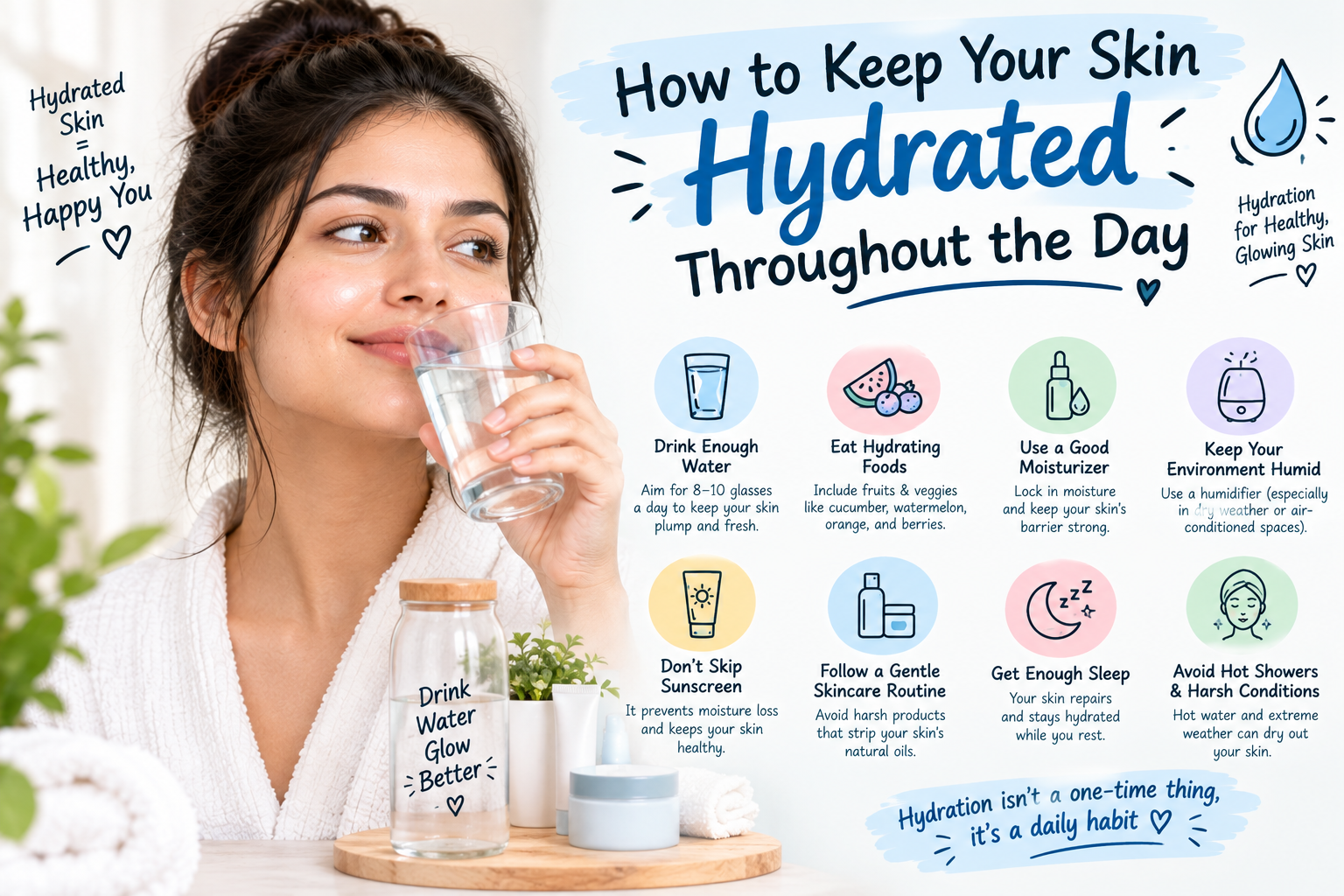
How to Keep Your Skin Hydrated Throughout the Day
Hydrated skin often looks fresh, smooth, and healthy. When your skin does not get enough moisture, it may feel tight, rough, flaky, or uncomfortable. Maintaining hydration is therefore an important part of a good skincare routine.
Skin hydration is not only about drinking water. Your cleanser, moisturizer, environment, lifestyle, and daily skincare habits can all affect how your skin feels.
The good news is that keeping your skin hydrated does not require a complicated routine. A few simple and consistent habits can make a noticeable difference.
In this article, we’ll discuss practical ways to keep your skin hydrated throughout the day, common mistakes that can cause dryness, and how to choose suitable skincare products.
What Does Hydrated Skin Mean?
Hydrated skin means the outer layer of your skin contains an adequate amount of water. Well-hydrated skin generally feels comfortable and flexible and may appear smoother and more refreshed.
It’s important to understand the difference between hydration and oiliness.
- Hydration refers mainly to the water content of the skin.
- Moisture is often used to describe the skin’s ability to retain water and the oils or emollients that help support the skin barrier.
Even oily or combination skin can become dehydrated.
1. Drink Enough Water
Staying hydrated is important for your overall health, and drinking enough fluids throughout the day supports normal body functions.
However, drinking extra water beyond what your body needs isn’t a guaranteed way to transform dry skin.
Instead, focus on maintaining regular fluid intake according to your thirst, activity level, climate, and individual needs.
You can also get fluids from foods such as:
- Watermelon
- Cucumber
- Oranges
- Strawberries
- Soups
- Other water-rich fruits and vegetables
2. Use a Gentle Cleanser
Cleansing is important, but an overly harsh cleanser can leave your skin feeling dry and tight.
Choose a gentle cleanser that removes dirt, excess oil, sunscreen, and makeup without making your skin feel stripped.
If your face feels extremely tight immediately after cleansing, consider whether your cleanser is too harsh or whether you are cleansing too frequently.
3. Avoid Very Hot Water
Hot water may feel relaxing, but prolonged exposure can leave the skin feeling dry or irritated.
When washing your face or showering, use lukewarm water instead.
Keep showers reasonably short, particularly if your skin is already dry or sensitive.
4. Apply Moisturizer Regularly
Moisturizer is one of the easiest ways to support comfortable, hydrated-looking skin.
Apply moisturizer after cleansing while your skin is slightly damp. This can help support moisture retention.
Look for ingredients such as:
- Glycerin
- Hyaluronic acid
- Ceramides
- Squalane
- Panthenol
The best moisturizer depends on your skin type and personal preferences.
For Dry Skin
A richer cream may provide more comfort and help reduce the feeling of dryness.
For Oily Skin
A lightweight gel or gel-cream may feel more comfortable.
For Combination Skin
You can use a lightweight moisturizer across the face and apply a little more to areas that feel dry.
5. Don’t Skip Sunscreen
Sun protection is an important part of a daytime skincare routine.
Prolonged UV exposure can contribute to skin damage and premature-looking aging. Using broad-spectrum sunscreen can help protect your skin while supporting your overall skincare routine.
Apply sunscreen as the final step of your morning skincare routine before makeup.
If you’re spending extended periods outdoors, follow the product instructions for reapplication, particularly after sweating or swimming.
6. Use Hydrating Skincare Ingredients
If your skin frequently feels dry or dehydrated, you may benefit from adding a hydrating serum or moisturizer.
Hyaluronic Acid
Hyaluronic acid is a humectant that helps attract and hold water.
Glycerin
Glycerin is another common humectant found in many hydrating skincare products.
Ceramides
Ceramides help support the skin barrier and can be useful in products designed for dry or sensitive skin.
Panthenol
Panthenol is commonly used in skincare for its moisturizing and soothing properties.
You don’t need all of these ingredients in one routine. Choose products that suit your skin and keep your routine manageable.
7. Moisturize After Cleansing
One useful habit is to avoid leaving your skin completely dry for a long period after washing.
After gently cleansing, pat your face dry rather than rubbing it aggressively. Then apply your moisturizer while the skin still has a little moisture.
This simple step can help your skin feel more comfortable.
8. Be Careful With Exfoliation
Exfoliation can help remove dead skin cells, but excessive exfoliation can disrupt the skin barrier and cause dryness or irritation.
Signs that you may be exfoliating too much include:
- Persistent redness
- Burning or stinging
- Increased sensitivity
- Flaking
- Tightness
If these occur, simplify your routine and give your skin time to recover.
9. Protect Your Skin From Dry Air
Environmental conditions can affect how your skin feels.
Dry indoor air, air conditioning, cold weather, and low humidity may contribute to dryness.
If your environment is particularly dry, consider:
- Using a humidifier
- Applying moisturizer regularly
- Avoiding very hot showers
- Using gentle skincare products
- Keeping showers reasonably short
10. Avoid Over-Cleansing
Washing your face repeatedly during the day isn’t necessary for most people.
Excessive cleansing can remove natural oils and may leave the skin feeling dry or irritated.
For many people, cleansing in the morning and evening is enough, while individual needs can vary.
If you become sweaty after exercise, gently cleansing or rinsing your face may be appropriate.
11. Choose Skincare According to Your Skin Type
Hydration doesn’t look the same for everyone.
Dry Skin
Look for creamy cleansers and richer moisturizers containing barrier-supporting ingredients.
Oily Skin
Choose lightweight, water-based or gel-textured products if they feel comfortable for you.
Combination Skin
Use lightweight hydration overall and pay additional attention to dry areas.
Sensitive Skin
Choose gentle, fragrance-free products when possible and introduce new products gradually.
12. Don’t Forget Your Lips
Your lips can become dry easily because they have a thinner protective barrier than much of the skin on your face.
Keep a nourishing lip balm available and apply it whenever your lips feel dry.
During outdoor activities, consider using a lip product with sun protection.
13. Hydrate Your Skin During Travel
Travel can expose your skin to different environments, including dry airplane cabins, air conditioning, heat, or cold weather.
During travel:
- Drink fluids regularly.
- Use a gentle moisturizer.
- Avoid unnecessary exfoliation.
- Keep lip balm nearby.
- Continue using sunscreen during daytime exposure.
- Avoid introducing multiple new skincare products while traveling.
14. Get Enough Sleep
Sleep is important for overall health and well-being, and maintaining a regular sleep schedule can support healthy-looking skin.
Instead of relying only on skincare products, combine your routine with healthy lifestyle habits.
Try to maintain consistent sleep and create a relaxing bedtime routine.
15. Eat a Balanced Diet
Your skin is part of your body, so overall nutrition matters.
A balanced diet can include:
- Fruits
- Vegetables
- Whole grains
- Protein-rich foods
- Healthy fats
- Nuts and seeds
Rather than focusing on a single “beauty food,” aim for variety and balanced nutrition.
Common Habits That Can Dry Out Your Skin
Some everyday habits may contribute to dryness or irritation.
Using Very Hot Water
Hot water can leave skin feeling dry.
Over-Exfoliating
Using exfoliating products too frequently can irritate the skin.
Using Harsh Cleansers
Strong cleansing products may strip the skin.
Skipping Moisturizer
Even oily skin can benefit from appropriate hydration.
Forgetting Sunscreen
Regular UV exposure can contribute to skin damage.
Using Too Many Active Ingredients
Combining multiple strong skincare treatments may increase irritation.
Constantly Changing Products
Frequent product changes make it harder to identify what works for your skin.
Simple Hydration Routine
You don’t need dozens of products.
Morning
Gentle cleanser → Hydrating serum (optional) → Moisturizer → Sunscreen
During the Day
- Drink fluids regularly.
- Reapply sunscreen when needed.
- Use lip balm if your lips feel dry.
- Avoid unnecessary face washing.
Night
Cleanser → Hydrating serum (optional) → Moisturizer
If you use treatment products, introduce them according to your skin’s tolerance and the product instructions.
Frequently Asked Questions
How can I hydrate my skin naturally?
Maintain regular fluid intake, eat a balanced diet, use a gentle skincare routine, moisturize regularly, and avoid habits that unnecessarily dry or irritate your skin.
Can oily skin be dehydrated?
Yes. Oily skin can still lack adequate water and may feel tight or uncomfortable.
Is drinking water enough to hydrate skin?
Drinking enough water supports overall hydration, but skincare and environmental factors also affect how hydrated your skin feels.
Should I moisturize every day?
For most people, regular moisturizing can help support the skin barrier and keep skin feeling comfortable.
What ingredient is best for dehydrated skin?
Ingredients such as glycerin, hyaluronic acid, and ceramides are commonly used in hydrating skincare products. The best choice depends on your skin type and individual needs.
Can over-exfoliation cause dry skin?
Yes. Excessive exfoliation can irritate the skin barrier and contribute to dryness, redness, and sensitivity.
Should I use moisturizer before or after sunscreen?
Generally, apply moisturizer first and sunscreen afterward as the final step of your morning skincare routine.
Final Thoughts
Keeping your skin hydrated throughout the day is less about using a large number of products and more about building consistent habits.
Drink enough fluids, use gentle skincare products, moisturize regularly, avoid excessive cleansing and exfoliation, protect your skin from the sun, and pay attention to your environment.
Most importantly, choose products based on your skin type and how your skin responds. A simple, consistent routine is often easier to maintain and can help your skin look comfortable, smooth, and healthy.
Leave a Reply