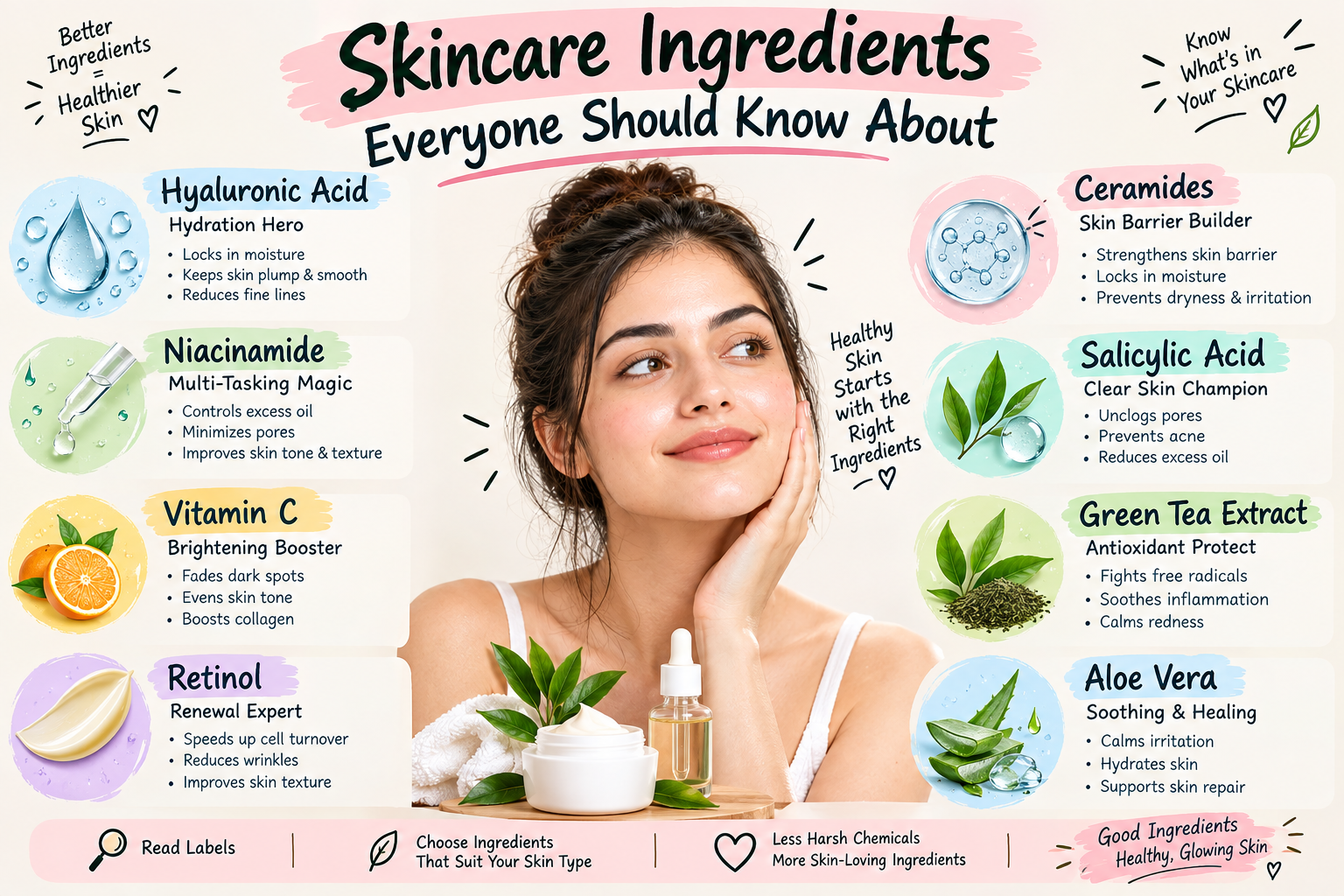
Skincare Ingredients Everyone Should Know About
Walking through a skincare aisle can sometimes feel overwhelming. There are cleansers, serums, moisturizers, toners, creams, masks, and countless ingredients promising smoother, brighter, clearer, or healthier-looking skin.
Understanding a few common skincare ingredients can make it easier to choose products that match your skin type and concerns.
You don’t need to know every ingredient listed on a product label. Learning about some of the most commonly used ingredients can help you build a simpler and more informed skincare routine.
In this guide, we’ll explain popular skincare ingredients, what they are commonly used for, who may benefit from them, and how to introduce them into your routine.
Why Should You Learn About Skincare Ingredients?
The name or packaging of a skincare product doesn’t always tell you exactly what it does.
Looking at the ingredients can help you understand whether a product is mainly designed for:
- Hydration
- Skin-barrier support
- Oil control
- Uneven-looking skin tone
- Exfoliation
- Soothing
- Sun protection
Understanding ingredients can also help you avoid buying multiple products that essentially serve the same purpose.
1. Hyaluronic Acid
Hyaluronic acid is a popular hydrating ingredient used in serums, moisturizers, and other skincare products.
It is a humectant, meaning it helps attract and hold water.
Benefits
Hyaluronic acid can help:
- Improve the feeling of hydration
- Make skin feel softer
- Reduce the feeling of tightness associated with dryness
- Support a plumper-looking appearance
It can be suitable for many different skin types, including dry, oily, and combination skin.
How to Use It
Apply a hydrating serum according to its product instructions and follow with moisturizer.
2. Niacinamide
Niacinamide, also known as vitamin B3, is a versatile skincare ingredient found in many serums and moisturizers.
It is commonly used in products targeting oiliness, uneven-looking skin tone, and skin-barrier support.
Benefits
Niacinamide may help:
- Support the skin barrier
- Improve the appearance of uneven skin tone
- Reduce the appearance of excess oil
- Improve the overall look of the skin
It is often considered a beginner-friendly active ingredient, although individual reactions can vary.
3. Vitamin C
Vitamin C is an antioxidant commonly used in morning skincare routines.
It is particularly popular in products designed to improve the appearance of dull or uneven-looking skin.
Benefits
Vitamin C can help:
- Support brighter-looking skin
- Improve the appearance of uneven skin tone
- Provide antioxidant protection
- Support a more radiant-looking complexion
Important Tip
Vitamin C products can vary significantly in formulation and stability. Store them according to the manufacturer’s instructions.
If you’re new to vitamin C, start gradually and monitor how your skin responds.
4. Retinoids
Retinoids are vitamin A derivatives used in skincare and dermatology.
They are commonly associated with improving the appearance of:
- Fine lines
- Uneven skin texture
- Acne
- Uneven pigmentation
Retinoids can be effective but may also cause dryness, irritation, or increased sensitivity when introduced too quickly.
How to Start
If you want to use a retinoid, start with a suitable product at a lower frequency and follow the product directions.
People who are pregnant or trying to become pregnant should consult a healthcare professional before using retinoid products.
5. Salicylic Acid
Salicylic acid is a beta hydroxy acid (BHA) commonly used in products designed for oily or acne-prone skin.
It can help exfoliate the skin and clear buildup within pores.
Common Uses
Salicylic acid is often found in:
- Cleansers
- Spot treatments
- Serums
- Acne products
It may be particularly useful for people dealing with clogged pores and excess oil.
However, excessive use can cause dryness or irritation.
6. Glycolic Acid
Glycolic acid is an alpha hydroxy acid (AHA).
It works as a chemical exfoliant and is commonly used to improve the appearance of:
- Rough texture
- Dull-looking skin
- Uneven skin tone
Because glycolic acid can be relatively strong for some people, beginners should introduce it gradually.
Avoid combining several exfoliating products without understanding how they interact with your routine.
7. Lactic Acid
Lactic acid is another AHA used for exfoliation.
Compared with some stronger exfoliating acids, products containing lactic acid may be formulated to provide a gentler exfoliating experience.
It can help improve the appearance of:
- Dull skin
- Uneven texture
- Roughness
As with any exfoliating ingredient, start slowly and monitor your skin’s response.
8. Ceramides
Ceramides are naturally occurring lipids found in the skin barrier.
They are commonly included in moisturizers and cleansers designed to support dry or compromised skin.
Benefits
Ceramide-containing products may help:
- Support the skin barrier
- Reduce feelings of dryness
- Improve skin comfort
- Help maintain moisture
Ceramides can be useful for many skin types, particularly when the skin feels dry or sensitive.
9. Glycerin
Glycerin is a widely used humectant.
It helps attract water and is found in many skincare products.
Why It’s Popular
Glycerin is:
- Hydrating
- Versatile
- Commonly used in moisturizers
- Suitable for many skin types
You will often find glycerin combined with other moisturizing ingredients.
10. Squalane
Squalane is an emollient commonly used in skincare products to soften and moisturize the skin.
It can be found in:
- Moisturizers
- Face oils
- Serums
- Cleansing products
It may be particularly comfortable for people with dry or dehydrated-feeling skin, although suitability depends on the individual product and skin type.
11. Panthenol
Panthenol, also known as provitamin B5, is commonly used in moisturizing and soothing skincare formulations.
It can help improve the feeling of dry or uncomfortable skin and is frequently found in products designed to support the skin barrier.
It is often suitable for simple, hydration-focused routines.
12. Centella Asiatica
Centella asiatica is a botanical ingredient commonly used in skincare products designed to soothe and support the skin.
It is particularly popular in gentle skincare routines.
You may find it in:
- Toners
- Serums
- Moisturizers
- Creams
- Cleansing products
If your skin is sensitive, always introduce new products gradually.
13. Azelaic Acid
Azelaic acid is an ingredient used in skincare and dermatology products.
It is commonly used for concerns such as:
- Acne
- Uneven-looking skin tone
- Redness
- Post-acne marks
It can be useful for people who want a multi-purpose treatment, but stronger formulations may cause irritation in some individuals.
14. Peptides
Peptides are short chains of amino acids used in many skincare formulations.
They are commonly included in products focused on supporting the appearance of smoother and firmer-looking skin.
Peptides are generally found in:
- Serums
- Moisturizers
- Eye creams
Different peptide formulations have different purposes, so check the product information rather than assuming all peptides work exactly the same way.
15. Zinc Oxide
Zinc oxide is a mineral UV filter used in sunscreen products.
Mineral sunscreens may contain zinc oxide, titanium dioxide, or both.
Zinc oxide is used to help protect skin from UV radiation.
When choosing sunscreen, look for appropriate broad-spectrum protection and follow the product’s application and reapplication instructions.
How to Choose Ingredients Based on Your Skin Type
Understanding your skin type can make ingredient selection easier.
Dry Skin
Look for hydrating and barrier-supporting ingredients such as:
- Hyaluronic acid
- Glycerin
- Ceramides
- Panthenol
- Squalane
Oily Skin
Consider lightweight products containing ingredients such as:
- Niacinamide
- Salicylic acid
- Hyaluronic acid
Avoid assuming that oily skin needs to be completely stripped of its natural oils.
Combination Skin
Combination skin can benefit from a balance of hydration and oil-control ingredients.
Options may include:
- Niacinamide
- Hyaluronic acid
- Glycerin
- Lightweight ceramide moisturizers
Sensitive Skin
Focus on simple, gentle formulas.
Ingredients such as ceramides, glycerin, and panthenol may be useful for supporting comfortable skin.
Introduce new active ingredients slowly.
Can You Use Multiple Active Ingredients Together?
Sometimes, but more isn’t always better.
Combining several active ingredients can increase the chance of irritation, particularly when using exfoliating acids or retinoids.
For beginners, a simple routine is often easier to manage.
For example:
Morning
Cleanser → Vitamin C or Niacinamide → Moisturizer → Sunscreen
Night
Cleanser → Treatment → Moisturizer
You don’t need to use every active ingredient in the same routine.
How to Introduce a New Skincare Ingredient
Whenever you add a new product:
1. Start Slowly
Don’t introduce several new products at the same time.
2. Patch Test
Test the product on a small area according to the product’s instructions before applying it widely.
3. Watch Your Skin
Stop or reduce use if you experience significant irritation.
4. Follow Product Instructions
More product does not necessarily mean better results.
5. Be Consistent
Give your routine time rather than constantly changing products.
Common Skincare Ingredient Mistakes
Using Too Many Actives
Using several powerful ingredients simultaneously can irritate the skin.
Ignoring Your Skin Type
A product that works well for one person may not work the same way for you.
Assuming Natural Means Safe
Natural ingredients can still cause irritation or allergic reactions.
Skipping Sunscreen
If you’re using exfoliating or other active ingredients, daily sun protection remains important.
Using Products Without Reading Instructions
Concentration, frequency, storage, and application instructions can vary between products.
Frequently Asked Questions
What is the most important skincare ingredient?
There isn’t one ingredient that is best for everyone. The right ingredient depends on your skin type and specific concerns.
Is niacinamide good for beginners?
Niacinamide is commonly used in beginner-friendly skincare routines, but individual skin reactions can vary.
Can I use hyaluronic acid every day?
Many people use hydrating ingredients such as hyaluronic acid daily. Follow the product’s instructions and use moisturizer as needed.
Can I use vitamin C and sunscreen together?
Yes. Vitamin C is commonly used in morning routines followed by moisturizer and sunscreen.
Can I use salicylic acid every day?
It depends on the product concentration and your skin’s tolerance. Some products are designed for daily use, while others are intended for less frequent application.
Are expensive skincare ingredients better?
Not necessarily. A higher price does not automatically mean a product will work better for your skin. Formulation, ingredient concentration, suitability, and consistent use all matter.
How long does skincare take to work?
Results vary depending on the product, ingredient, skin concern, and individual. Some products can improve skin feel quickly, while other concerns may require consistent use over a longer period.
Final Thoughts
Understanding skincare ingredients can make your routine simpler and more effective.
Instead of buying products based only on attractive packaging or trending ingredients, learn what the key ingredients are designed to do and choose products according to your skin type and concerns.
Start with the basics: gentle cleansing, appropriate hydration, moisturizer, and daily sunscreen. Add active ingredients gradually when you have a specific reason to use them.
A simple routine that you can follow consistently is often more useful than a complicated routine filled with products your skin doesn’t need.
Leave a Reply