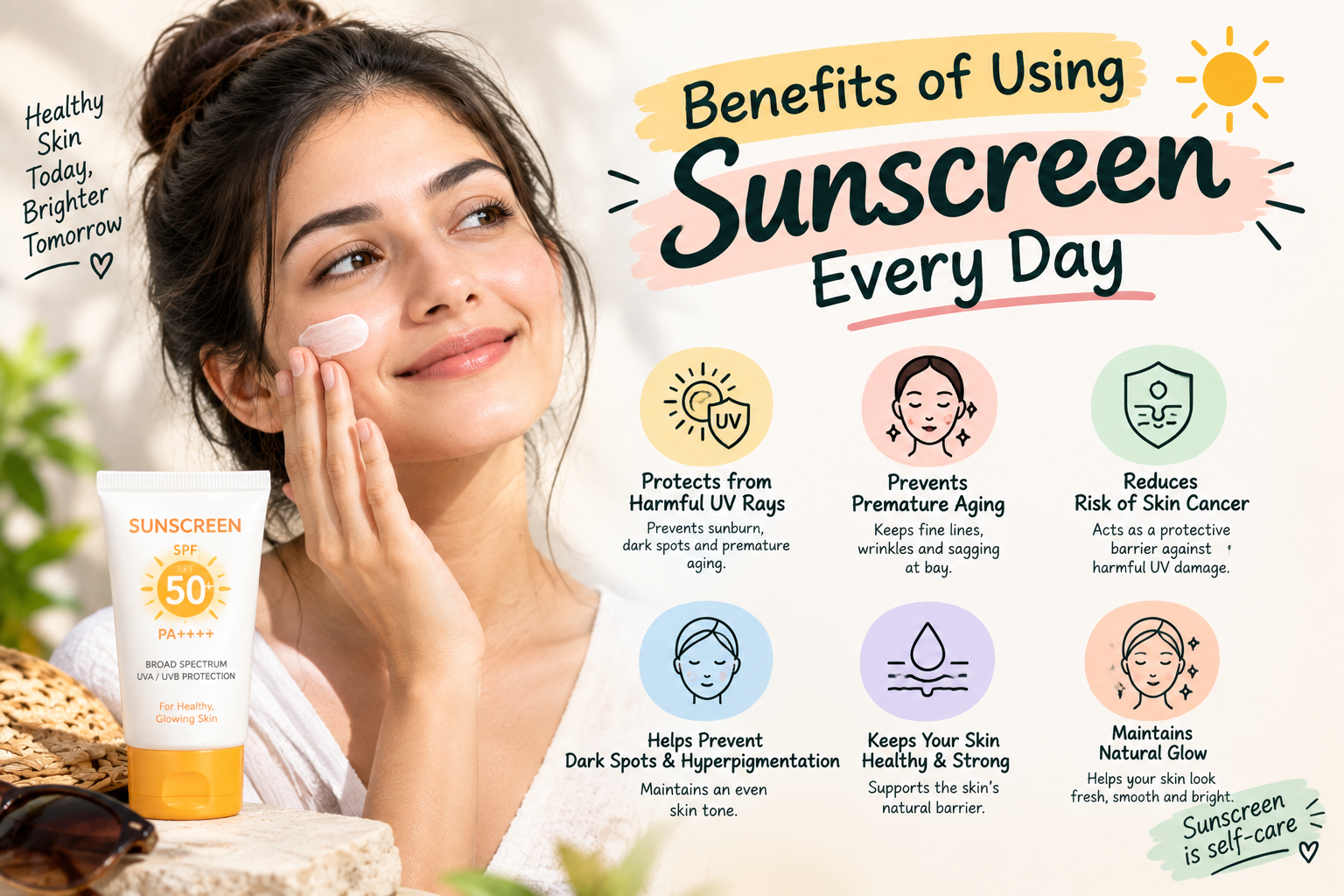
Benefits of Using Sunscreen Every Day
Sunscreen is one of the most important products in a daily skincare routine. Whether you spend most of your day outdoors or work indoors, your skin can be exposed to ultraviolet (UV) radiation from the sun. Regular sun protection can help protect your skin from premature signs of aging and sun damage.
Many people think sunscreen is only necessary during summer or when going to the beach. However, making sunscreen a daily habit can support healthier-looking skin throughout the year.
In this article, we’ll explore the benefits of using sunscreen every day, how to choose the right sunscreen, how much to apply, and common mistakes to avoid.
What Is Sunscreen?
Sunscreen is a skincare product designed to help protect the skin from ultraviolet radiation. Depending on the formula, it may use mineral or chemical UV filters, or a combination of both.
Two major types of UV radiation are important for skin protection:
- UVA: Associated with skin aging and can contribute to long-term skin damage.
- UVB: A major cause of sunburn and can also contribute to skin damage.
A broad-spectrum sunscreen is designed to provide protection against both UVA and UVB radiation.
1. Helps Protect Against Sun Damage
One of the main reasons to use sunscreen every day is to reduce your skin’s exposure to harmful UV radiation.
Repeated exposure to the sun can contribute to visible skin changes such as uneven tone, dryness, rough texture, and premature-looking aging. Daily sunscreen helps create an additional layer of protection between your skin and UV radiation.
2. Helps Prevent Premature Skin Aging
Sun exposure is one of the major environmental factors associated with visible skin aging.
Long-term UV exposure can contribute to:
- Fine lines
- Wrinkles
- Uneven skin tone
- Loss of skin elasticity
- Rough-looking texture
- Dark spots
Using sunscreen consistently can help protect your skin from unnecessary UV exposure and support a more youthful-looking appearance.
3. Helps Reduce the Appearance of Dark Spots
Sun exposure can make existing pigmentation and dark spots appear more noticeable.
If you are already using products designed to improve uneven skin tone, daily sunscreen is especially important because continued UV exposure can work against your skincare routine.
Consistent sun protection can help reduce additional UV-triggered pigmentation and support a more even-looking complexion.
4. Helps Protect Against Sunburn
Sunburn is a visible sign that your skin has received too much UV exposure.
Symptoms can include:
- Redness
- Tenderness
- Warm or painful skin
- Peeling
- Temporary sensitivity
Using sunscreen correctly can help reduce the amount of UV radiation reaching your skin and lower the risk of sunburn.
However, sunscreen should not be considered permission to stay in direct sunlight for unlimited periods. Shade, protective clothing, and avoiding intense midday sun can also help.
5. Supports an Even-Looking Skin Tone
Regular sun exposure can contribute to uneven pigmentation and changes in skin tone.
Daily sunscreen can help protect your complexion from additional UV-related changes, making it an important part of a routine focused on maintaining an even and healthy-looking appearance.
6. Sunscreen Is Useful in Every Season
You don’t need sunscreen only during hot summer months.
UV exposure occurs throughout the year, including on days when the weather feels cool or cloudy. This is why sunscreen can be a useful daily skincare habit regardless of the season.
Your sun-protection needs may change depending on your location, outdoor activities, and the intensity of sunlight.
7. Sunscreen Complements Your Skincare Routine
A skincare routine can include cleansers, serums, moisturizers, and other products. But without sun protection, your skin may continue to receive daily UV exposure.
A simple morning routine can look like:
- Cleanser
- Toner, if you use one
- Serum, if needed
- Moisturizer
- Sunscreen
Sunscreen should generally be the final step of your morning skincare routine before makeup.
8. Helps Protect Your Neck, Ears, and Hands Too
Many people apply sunscreen only to their face and forget other exposed areas.
Remember areas such as:
- Neck
- Ears
- Back of the hands
- Forehead
- Hairline
- Upper chest when exposed
These areas can also receive regular sun exposure, so they should not be overlooked.
How to Choose the Right Sunscreen
Choosing a sunscreen can feel confusing because there are many formulas available.
Here are some things to look for.
Choose Broad-Spectrum Protection
Look for a sunscreen labeled broad spectrum so it provides protection against both UVA and UVB radiation.
Choose SPF 30 or Higher
For everyday use, many people choose a broad-spectrum sunscreen with SPF 30 or higher.
SPF mainly describes protection against UVB-related sun exposure. Higher SPF does not mean you can apply less sunscreen or skip reapplication.
Consider Your Skin Type
Different textures may work better for different skin types.
Oily or combination skin:
Lightweight gel or fluid formulas may feel more comfortable.
Dry skin:
Cream-based or moisturizing sunscreens may be preferable.
Sensitive skin:
A gentle, fragrance-free formula may be more suitable.
Acne-prone skin:
Look for lightweight, non-comedogenic formulas if that works well for your skin.
How Much Sunscreen Should You Apply?
Applying too little sunscreen can reduce the protection you actually receive.
For the face and neck, a commonly used practical approach is the two-finger method: place sunscreen along the length of two fingers and use an adequate amount for the exposed face and neck area.
The exact amount needed can vary depending on the product, face size, and areas being covered.
Don’t forget exposed areas such as your ears and the back of your neck.
When Should You Apply Sunscreen?
Apply sunscreen as part of your morning skincare routine before going outdoors.
Give the product enough time to form an even layer according to the product instructions.
If you’re spending extended time outdoors, sweating, swimming, or wiping your face, you may need to reapply more frequently.
Common Sunscreen Mistakes to Avoid
1. Applying Too Little
Using a tiny amount may not provide the protection indicated on the product label.
2. Applying Only on Sunny Days
UV exposure isn’t limited to extremely hot or sunny weather.
3. Forgetting the Neck and Ears
Your face isn’t the only exposed area that needs protection.
4. Not Reapplying
Sunscreen can wear off through sweating, swimming, towel drying, or normal daily activities.
5. Using Expired Sunscreen
Check the expiration date and follow the storage instructions provided by the manufacturer.
6. Depending Only on Sunscreen
Sunscreen works best as part of a broader sun-protection strategy. Hats, sunglasses, protective clothing, shade, and limiting prolonged exposure during intense sunlight can also help.
Can You Wear Makeup Over Sunscreen?
Yes. Sunscreen can generally be used underneath makeup.
A simple order is:
Skincare → Moisturizer → Sunscreen → Makeup
Allow the sunscreen to settle according to the product instructions before applying makeup.
Some makeup products contain SPF, but they generally should not be treated as a complete replacement for dedicated sunscreen unless they provide adequate broad-spectrum protection and are applied in sufficient amounts.
Should You Wear Sunscreen Indoors?
Whether you need sunscreen indoors depends on factors such as your exposure to daylight and whether you spend time near windows.
If you’re working close to windows with substantial daylight exposure or regularly stepping outside during the day, keeping sunscreen as part of your morning routine can be a practical habit.
Simple Daily Sun-Protection Routine
You don’t need a complicated routine to protect your skin.
Morning
- Cleanse your face gently.
- Apply your preferred skincare products.
- Apply moisturizer if needed.
- Apply broad-spectrum sunscreen.
- Protect exposed skin with clothing or accessories when appropriate.
During the Day
- Reapply sunscreen when needed, particularly after sweating, swimming, or prolonged outdoor exposure.
- Seek shade when possible.
- Wear protective clothing, a hat, and sunglasses during extended outdoor activities.
Frequently Asked Questions
Is sunscreen necessary every day?
Daily sunscreen can help reduce regular UV exposure and support long-term skin protection, especially when you spend time outdoors.
What SPF should I use?
A broad-spectrum sunscreen with SPF 30 or higher is a common choice for everyday protection.
Can oily skin use sunscreen?
Yes. People with oily or combination skin can look for lightweight, non-comedogenic formulas that feel comfortable on the skin.
Can sunscreen cause pimples?
Some sunscreen formulas may not suit certain skin types. If you are acne-prone, choosing a lightweight, non-comedogenic product may help reduce the chance of clogged pores.
Do I need sunscreen in winter?
UV exposure can still occur during winter, so sun protection can remain part of your daily routine.
Do I need sunscreen if I stay indoors?
It depends on your environment and daylight exposure. If you spend significant time near windows or go outside during the day, sunscreen may be useful.
Final Thoughts
Sunscreen is one of the simplest ways to add daily sun protection to your skincare routine. Consistent use can help protect against sunburn, UV-related skin damage, premature-looking aging, and uneven pigmentation.
The key is not simply buying sunscreen—it is using enough, applying it consistently, and reapplying when necessary.
For a simple routine, choose a broad-spectrum sunscreen that suits your skin type and make it a regular part of your morning skincare routine. Combined with shade, protective clothing, and other sun-safe habits, sunscreen can help you maintain healthier-looking skin for years to come.
Leave a Reply