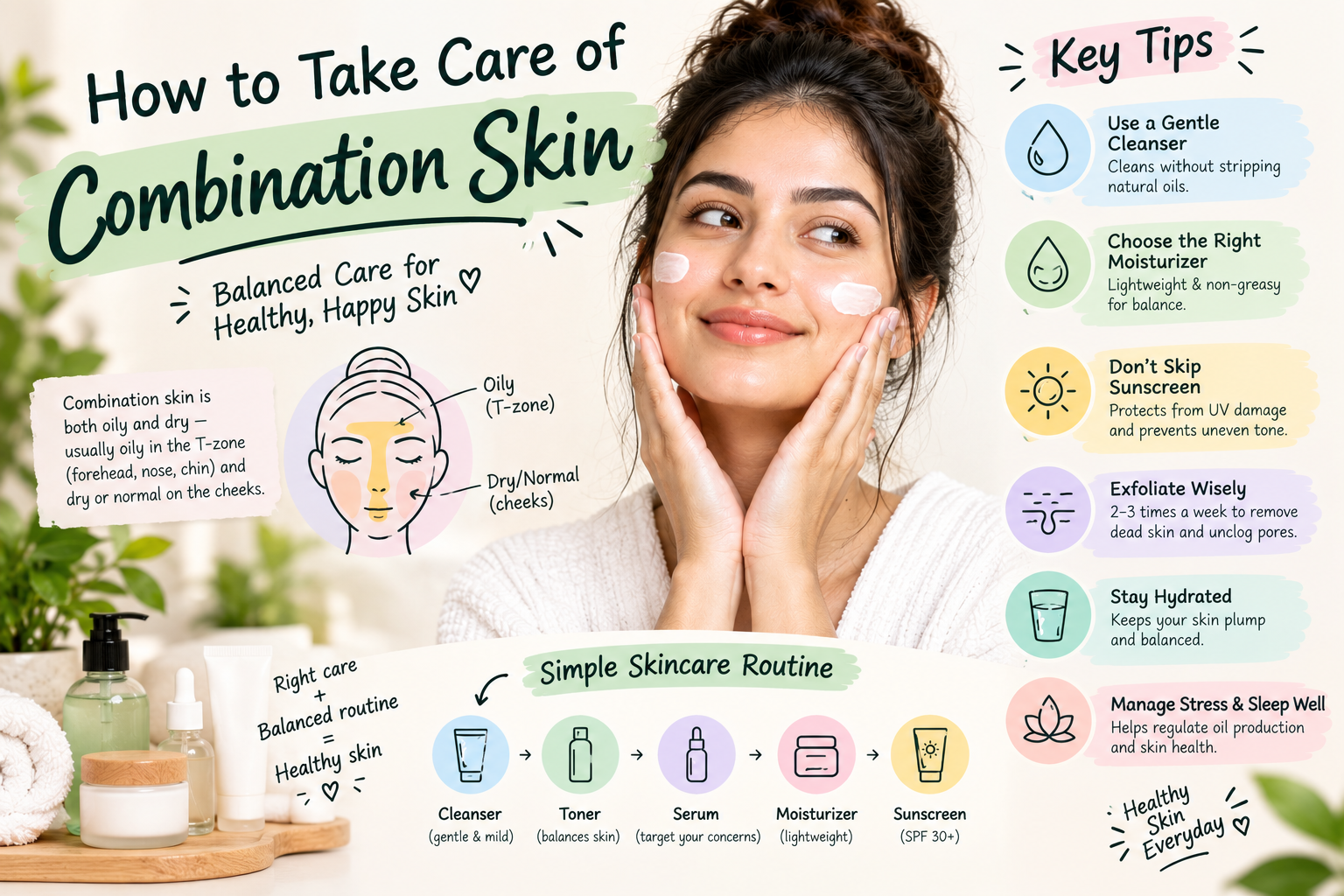
How to Take Care of Combination Skin
Taking care of combination skin can sometimes feel confusing. Your skin may be oily in certain areas while feeling dry or normal in others. This means using products that are too heavy can make oily areas feel greasy, while products that are too harsh can leave dry areas uncomfortable.
The good news is that combination skin does not require an overly complicated skincare routine. The key is to maintain balance, use gentle products, and pay attention to what your skin actually needs.
In this guide, we’ll explain what combination skin is, how to build a simple routine, which ingredients can be useful, common mistakes to avoid, and practical tips for keeping combination skin healthy and comfortable.
What Is Combination Skin?
Combination skin is a skin type where different areas of the face have different characteristics.
A common pattern is:
- Oily forehead
- Oily nose
- Oily chin
- Normal or dry cheeks
- Occasional clogged pores in the T-zone
- Dryness in certain areas
The forehead, nose, and chin are commonly referred to as the T-zone.
However, everyone’s combination skin can look different. Some people may have only mild oiliness, while others may experience noticeable dryness and excess oil at the same time.
Why Does Combination Skin Need Special Care?
The biggest challenge with combination skin is finding the right balance.
If you use strong products designed only for oily skin, dry areas may become tight or irritated. On the other hand, very rich products may feel uncomfortable in areas that already produce excess oil.
Instead of treating your entire face exactly the same way, focus on maintaining overall skin health and adjust product textures according to your skin’s needs.
Simple Skincare Routine for Combination Skin
You don’t need a large collection of skincare products. A simple routine can be enough.
Morning Routine
Step 1: Use a Gentle Cleanser
Start your morning with a gentle cleanser that removes excess oil and overnight buildup without leaving your skin feeling tight.
Avoid aggressively scrubbing your face.
If your skin feels dry or uncomfortable after cleansing, your cleanser may be too harsh or you may be cleansing too frequently.
Step 2: Apply Toner if Needed
Toner is optional.
If you enjoy using one, choose a gentle, hydrating formula rather than a strong alcohol-based toner.
Ingredients such as soothing and hydrating ingredients may help your skin feel comfortable.
Step 3: Use a Serum
A serum is not essential, but you can add one depending on your skincare goals.
For combination skin, lightweight hydrating serums can be useful.
For example, products containing ingredients such as:
- Hyaluronic acid
- Niacinamide
- Panthenol
- Centella asiatica
may be suitable depending on your individual skin and product formulation.
Step 4: Apply Moisturizer
Combination skin still needs moisturizer.
Skipping moisturizer because your T-zone is oily can sometimes leave the dry areas of your face uncomfortable.
Choose a lightweight moisturizer that provides hydration without feeling excessively greasy.
You can also apply a little more moisturizer to dry areas and a lighter layer to oilier areas.
Step 5: Apply Sunscreen
Finish your morning routine with a broad-spectrum sunscreen.
A sunscreen with SPF 30 or higher is a common choice for daily use.
Apply enough sunscreen to cover exposed areas and reapply when needed, especially during prolonged outdoor activities.
Night Routine for Combination Skin
Your nighttime routine can be simple.
1. Remove Makeup or Sunscreen
If you’ve been wearing makeup or sunscreen, properly remove it before cleansing.
2. Cleanse
Use a gentle cleanser to remove dirt, oil, makeup residue, and other buildup.
3. Apply Treatment or Serum
If you use a treatment product, apply it according to the product instructions.
Avoid using multiple strong active ingredients at the same time unless you know your skin tolerates them.
4. Moisturize
Apply a comfortable moisturizer to help support your skin barrier overnight.
If certain areas are particularly dry, you can apply a slightly richer layer there.
Best Ingredients for Combination Skin
The right ingredients depend on your specific concerns, but several ingredients are commonly used in combination-skin routines.
Niacinamide
Niacinamide is a form of vitamin B3 commonly used in skincare. It can support the skin barrier and may be useful for people concerned about excess oil and uneven-looking skin.
Hyaluronic Acid
Hyaluronic acid is a hydrating ingredient that helps attract and retain water in the skin.
It can be useful when you want hydration without using a heavy cream.
Ceramides
Ceramides are lipids naturally found in the skin barrier. Skincare products containing ceramides can help support the skin barrier and reduce feelings of dryness.
Glycerin
Glycerin is a common humectant that helps attract water to the skin.
It is found in many moisturizers, cleansers, and serums.
Centella Asiatica
Centella asiatica is commonly used in skincare products designed to soothe and support the skin.
It can be an option if your skin is prone to feeling irritated or sensitive.
How to Control Excess Oil
Combination skin does not mean you need to remove all the oil from your face.
Some natural oil is important for maintaining healthy skin.
To manage excess oil:
- Use a gentle cleanser.
- Avoid washing your face excessively.
- Choose lightweight skincare products.
- Look for non-comedogenic products if you are prone to clogged pores.
- Avoid repeatedly touching your face.
- Use blotting paper when necessary instead of constantly washing your face.
How to Deal With Dry Areas
If your cheeks or other areas feel dry, focus on gentle hydration.
Try:
- A gentle cleanser
- Hydrating serum
- Lightweight moisturizer
- A richer moisturizer only on particularly dry areas
- Avoiding very hot water
- Avoiding excessive exfoliation
If your skin becomes persistently cracked, painful, itchy, or severely irritated, consider speaking with a dermatologist.
Should You Use Different Products on Different Areas?
You don’t necessarily need separate products for every part of your face.
However, targeted application can sometimes be helpful.
For example, you might use:
- A lightweight moisturizer across most of the face
- A slightly richer moisturizer on dry areas
- A targeted treatment on areas with specific concerns
Keep your routine simple and introduce new products gradually.
Exfoliation for Combination Skin
Exfoliation can help remove dead skin cells, but more is not always better.
Over-exfoliating can cause:
- Dryness
- Redness
- Sensitivity
- Irritation
- A damaged skin barrier
If you choose to exfoliate, start slowly and use a product appropriate for your skin.
Avoid combining several exfoliating products at once.
Face Masks for Combination Skin
Face masks can be used occasionally, but they are not essential.
If you enjoy masks, consider using different types on different areas.
For example, a hydrating mask may be more comfortable on dry cheeks, while a gentle clay-based product may be suitable for an oily T-zone.
Avoid leaving clay masks on until they become extremely dry and uncomfortable.
Common Combination Skin Mistakes
1. Using Harsh Cleansers
Strong cleansers can strip the skin and make dry areas feel even more uncomfortable.
2. Skipping Moisturizer
Oily areas still need hydration.
3. Over-Washing Your Face
Washing repeatedly throughout the day can cause dryness and irritation.
4. Using Too Many Products
Adding multiple serums, acids, masks, and treatments at once can make it difficult to identify what is helping or irritating your skin.
5. Scrubbing Too Hard
Physical scrubbing can irritate the skin, especially when done frequently.
6. Forgetting Sunscreen
Daily sun protection remains important regardless of whether your skin is oily, dry, or combination.
7. Changing Products Too Frequently
Give your routine enough time before deciding whether a product works for you, unless it causes irritation or another obvious problem.
Lifestyle Tips for Combination Skin
Skincare is only one part of maintaining healthy-looking skin.
Try to maintain healthy everyday habits such as:
- Drink enough fluids according to your body’s needs.
- Eat a balanced diet.
- Get adequate sleep.
- Stay physically active.
- Manage stress.
- Change pillowcases regularly.
- Clean your phone screen regularly.
- Avoid unnecessarily touching your face.
- Remove makeup before sleeping.
These habits don’t replace skincare, but they can support overall well-being and healthy-looking skin.
Simple Combination Skin Routine
If you want to keep your routine minimal, try this basic structure:
Morning
Cleanser → Moisturizer → Sunscreen
Night
Cleanser → Treatment/Serum → Moisturizer
You can add a toner or other products if you have a specific reason for using them.
The best routine is usually one that you can follow consistently without irritating your skin.
Frequently Asked Questions
Is combination skin oily or dry?
Combination skin can be both. Typically, some areas such as the T-zone are oilier while other areas may be normal or dry.
Should combination skin use moisturizer?
Yes. Moisturizer can help maintain hydration and support the skin barrier.
Is gel moisturizer good for combination skin?
A lightweight gel or gel-cream moisturizer may feel comfortable for many people with combination skin, particularly when the T-zone becomes oily.
How often should combination skin be washed?
For many people, cleansing twice daily is sufficient, although individual needs can vary. If your skin feels tight or irritated, you may need a gentler approach.
Can combination skin use face oil?
It can, but the right product and amount matter. If you are prone to clogged pores, choose products carefully and use a small amount.
Does combination skin need sunscreen?
Yes. Combination skin still needs daily sun protection.
Can combination skin become sensitive?
Yes. Combination skin can become irritated or sensitive, particularly when exposed to harsh products, excessive exfoliation, or over-cleansing.
Final Thoughts
Taking care of combination skin is mainly about finding the right balance between hydration and oil control.
You don’t need a complicated 10-step routine. A gentle cleanser, suitable moisturizer, targeted products when needed, and daily sunscreen can form a strong foundation.
Pay attention to how your skin responds, introduce new products gradually, and avoid trying too many products at once.
With consistency and the right approach, combination skin can look healthy, balanced, hydrated, and fresh.
Leave a Reply